Quote from "ESPES Manual of Pediatric Minimally Invasive Surgery" by Ciro Esposito, François Becmeur, Henri Steyaert, Philipp Szavay -
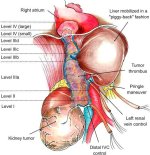
"Consecutive SIOP protocols and trials have consistently considered open radical nephroureterectomy as the gold standard approach for treating WT. According to surgical guidelines, the procedure should be performed through a long transverse abdominal or thoraco-abdominal incision, to allow careful inspection of the abdominal cavity and liver, retroperitoneal lymph node sampling, and radical nephroureterectomy outside of the Gerota’s fascia, including perirenal fat and sometimes the adrenal gland in monobloc resection."
"Consecutive SIOP protocols and trials have consistently considered open radical nephroureterectomy as the gold standard approach for treating WT. According to surgical guidelines, the procedure should be performed through a long transverse abdominal or thoraco-abdominal incision, to allow careful inspection of the abdominal cavity and liver, retroperitoneal lymph node sampling, and radical nephroureterectomy outside of the Gerota’s fascia, including perirenal fat and sometimes the adrenal gland in monobloc resection."