correct answer
e DICER 1
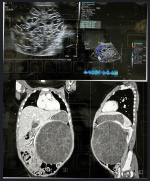
It is estimated that anywhere from 10% of children’s cancers are a manifestation of predisposition syndromes with germ line mutations. DICER1 gene is located on chromosome 14. Its protein is a ribonuclease III endoribonuclease which is essential for the production of microRNAs. MicroRNAs have an important role in the expression of over 30% of encoding genes. It is thought to function as a haploinsufficient tumor gene, where loss of one allele leads to tumor progression. The most common tumors associated with DICER 1 include pleuropulmonary blastoma and PPB like neoplasms, cystic nephroma of the kidney, anaplastic sarcoma of the kidney, and thyroid tumors in children including papillary, follicular and poorly differentiated thyroid carcinoma. Tumors of the reproductive system and neurologic systems have been described.
Tumor surveillance for a patient with known DICER1 mutation is recommended as follows: fetal ultrasound at third trimester, annual examination up to 20 years, chest Xray every 6 months until 6 years of age, abdominal ultrasound during infancy then every 6-months until 6 years of age, annual thyroid examination and ultrasound from age 8 to 20 years. Low dose CT of the chest is recommended for consideration around age 2.5-3 years of age. If DICER1 syndrome is diagnosed after age of 6, imaging recommendations include CXR, abdominal ultrasound and thyroid US.
The other cancer predisposition genes listed are not associated with cystic nephroma of the kidney. RB1 is associated with retinoblastoma, NF1 is associated with neurofibromas and optic gliomas. LiFraumeni syndrome is caused by a mutation in the TP53 gene, which plays a crucial role in DNA repair and tumor suppression, conferring a higher risk for soft tissue sarcoma, brain tumors, breast cancer, adrenocortical carcinoma and leukemia. RET protooncogene encodes a receptor in the tyrosine kinase gene and its mutations can lead to multiple endocrine neoplasia 2 (MEN2) tumors, familial medullary thyroid tumors and Hirschsprung disease.