correct answer
d Functional end-end anastomosis
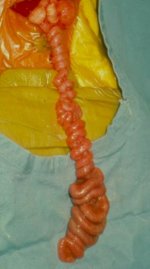
Apple-peel or type IIIb atresia is the rarest form of intestinal atresia occurring in less than 10% of infants with jejunoileal atresia. It is characterized by proximal atresia (often with a bulbous segment), absence of the superior mesenteric artery and distal bowel coiled around its retrograde blood supply. A primary end-end anastomosis is warranted in most cases if the bowel appears viable as above. Attention to proper bowel positioning is important since perfusion to this distal segment may be tenuous and prone to ischemia. It is not possible to close any mesenteric trap nor attempt to unwind the distal bowel. Serial transverse enteroplasty of the proximal segment may be used to preserve bowel length, either primarily or at a secondary operation. Tapering proximal enteroplasty is also an option if there is sufficient bowel. An end-side anastomosis would leave a blind end prone to bacterial overgrowth.
Over 90% of infants with type III b atresia survive. Outcomes of babies with type IIIb atresia are directly related to the total length of intestine. Thirty-five cm of small intestine in an infant is often noted as the minimal small bowel length needed to attain full enteral nutrition although this has been accomplished in infants with even less. The average duration of parenteral nutrition use in infants with type III b atresia is less than two months. Retrospective studies of type III b and type IV atresias have both found that achieving full enteral nutrition can be expected in those with adequate intestinal length.
Low birth weight and associated anomalies are independent prognostic factors for worse outcomes.