• Welcome to Pediatric Surgery Club! If this is your first visit, please sign up to get the best experience sign up!

weekly question 29/6/2025

.US site, click here!

Admin

Administrator
Staff member
A 27-week neonate weighing 950g is born at an outside hospital. The neonate is in respiratory distress. The airway is secured after three attempts, There are also several attempts to pass an NG tube each of which meets resistance at 8 cm.The infant has stabilized after intubation and an umbilical venous catheter is inserted for vascular access. Vital signs are currently normal for gestational age.The neonate is being transferred to your center for suspected esophageal atresia and tracheo-esophageal fistula. Upon arrival, a chest radiograph to confirm endotracheal and nasogastric tube position is performed. Based on the accompanying image, what is the most likely diagnosis?
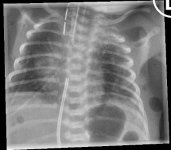
IMG_9163.jpg

A Pyriform sinus

B Esophageal atresia

C Phayngeal perforation

D Esophageal perforation

E Esophageal diverticulum
 
Correct answer
C Phayngeal perforation

The radiograph shown is highly suggestive of a pharyngeal perforation that occurred during the resuscitation of this ill, premature infant.The history of many intubation or nasogastic tube insertion attempts in a premature infant increases this suspicion. The NGT in the image is more lateral than would be expected in esophageal atresia. A lateral neck radiograph often confirms the suspicion as this shows the NGT passing more posteriorly than expected in esophageal atresia. While contrast studies are often helpful in confirming esophageal perforations, plain radiographs combined with history can make the diagnosis of pharyngeal perforations most of the time. Other signs or symptoms of pharynheal perforation include respiratory distress, pneumomediastinum, subcutaneous emphysema, excessive salivation, blood in the NGT or sepsis (e.g. fever, tachycardia). The management of pharyngeal perforations in premature infants is generally non-operative when there is an early diagnosis, minimal contamination, no signs of ongoing respiratory distress or sepsis and the injury is confined to the upper mediastinum. Immediate management in this case included placing the infant NPO, removing the NGT as well as starting broad-spectrum antibiotics and parenteral nutrition. In the context of ongonig respiratory distress or sepsis, with localized collections or effusion, drainage procedures can be employed to obtain source control. Outcomes are generally good with conservative measures.
 
Back
Top