• Welcome to Pediatric Surgery Club! If this is your first visit, please sign up to get the best experience sign up!

weekly question 28/6/2026

.US site, click here!

Admin

Administrator
Staff member
A 10-year-old is involved in a high speed motor vehicle collision. They were appropriately restrained with a seatbelt. On physical exam, there is a visible seatbelt sign, mild lower abdominal pain and no neurologic deficits. Their CT scan (image included) shows a comminuted fracture of L2 vertebral body, widening of the L1/L2 interspace with subluxation and perched facet of L2 on L1. Additional findings include a grade 2 splenic injury and a small amount of free intra-abdominal fluid. Neurosurgery wants to repair the spine injuries after admission, however, on the morning of scheduled repair with neurosurgery, the patient has a fever to 103℉, worsening abdominal pain, and tachycardia. What is the best next step in the management of this patient?
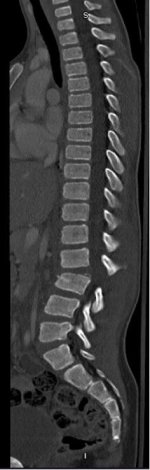
repview (1).jpeg

a Diagnostic laparoscopy/laparotomy

b Proceed with neurosurgical repair of the spine injury

c Transfuse 20 ml/kg of packed red blood cells

d Repeat abdominal CT scan

e Broad spectrum antibiotics
 
10 yaşında bir çocuk yüksek hızlı bir trafik kazasına karıştı. Çocuk emniyet kemeriyle uygun şekilde bağlanmıştı. Fizik muayenede, emniyet kemeri izi, hafif alt karın ağrısı ve nörolojik bir eksiklik yoktu. BT taraması (görüntü ekte) L2 omur gövdesinde parçalı kırık, L1/L2 interspasyumunda genişleme, subluksasyon ve L2'nin L1 üzerinde yerleşmiş fasetini göstermektedir. Ek bulgular arasında 2. derece dalak yaralanması ve az miktarda serbest karın içi sıvı bulunmaktadır. Nöroşirürji, hastaneye yatıştan sonra omurga yaralanmalarını onarmak istiyor; ancak planlanan onarımın yapılacağı sabah, hastada 39,4°C'ye (103℉) yükselen ateş, kötüleşen karın ağrısı ve taşikardi gelişmiştir. Bu hastanın yönetiminde en iyi sonraki adım nedir?

View attachment 15050

Tanısal laparoskopi/laparotomi

b) Omurga yaralanmasının nöroşirürjik onarımına devam edin.

c) Her kilogram için 20 ml konsantre kırmızı kan hücresi transfüzyonu yapın.

d Karın bölgesinin BT taramasını tekrarlayın

e Geniş spektrumlu antibiyotikler
A
 
correct answer
a Diagnostic laparoscopy/laparotomy

The most appropriate management in this child with a Chance fracture, fevers, abdominal pain, and tachycardia is to take the child to the operating room due to concern for a hollow viscus injury.

Chance fracture, a vertebral fracture involving all three spinal columns was first described in 1948 by radiologist G.Q. Chance. Chance fractures are the result of a sudden deceleration against a fixed point, most commonly caused by motor vehicle collisions with associated seatbelt use. This fracture pattern requires significant force to produce a flexion injury to the vertebral body and a distraction injury to the posterior elements. Most Chance fractures in children occur in the lumbar spine. Literature describing a group of trauma patients (14 years and older) estimates that 2% of patients with a blunt traumatic injury have a thoracolumbar vertebral fracture. Recent literature has compared the injury patterns in pediatric versus adults with Chance fractures. In the setting of Chance fracture, pediatric patients are more likely to have concomitant intra-abdominal organ injury (63% vs 23%), especially hollow viscus injury (51.3% vs 8.4%) compared with adults regardless of mechanism.
 
Back
Top