• Welcome to Pediatric Surgery Club! If this is your first visit, please sign up to get the best experience sign up!

weekly question 23/3/2025

.US site, click here!

Admin

Administrator
Staff member
An eleven year old girl presents with difficulty swallowing. An esophagram shows a distended esophagus and “beaking” at the gastroesophageal junction. Upper endoscopy demonstrates dilated esophageal body and puckering at the LES and retained saliva in the esophagus. The treating gastroenterologist performed esophageal pressure topography and noted the integrated relaxation pressure is elevated at 20mmHg and the esophagus has no peristalsis. According to the Chicago Classification of Esophageal Motility, this patient has

a Type I achalasia

b Type II achalasia

c Type III achalasia

d Diffuse esophageal spasm
 
Correct answer
a Type I achalasia

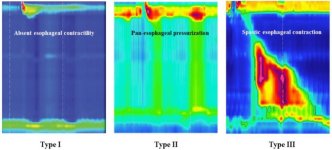
Achalasia has been classically defined by conventional manometry as the absence of esophageal peristalsis and incomplete LES relaxation with pressures greater than 10 mm Hg. Using findings from high resolution manometry and esophageal topography, the Chicago Classification redefined esophageal motility disorders. The achalasia subgroup of motility disorders is characterized by elevated median integrated resting pressure (IRP>15 mm Hg). Type I achalasia has no esophageal peristalsis. Type II achalasia patients have panesophageal pressurization >20% of swallows. These patients are more likely to report weight loss. Type III achalasia patients have peristaltic fragmented or spastic contractions. Type III patients frequently report chest pain.

Diffuse esophageal spasm has normal IRP, normal peristalsis but with >20% of swallows with reduced latency. DES is not in the achalasia family.

Histologic findings in Type I and Type II achalasia include aganglionosis and neuronal loss. It is thought that Type II achalasia may progress to Type I if untreated. Type III achalasia has no neuronal loss, but has impaired inhibitory postganglionic neuron function.

repview (1).jpg
 
Back
Top