• Welcome to Pediatric Surgery Club! If this is your first visit, please sign up to get the best experience sign up!

weekly question 19/7/2026

.US site, click here!

Admin

Administrator
Staff member
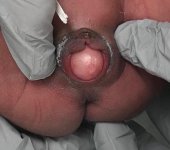
You are called to the neonatal intensive care unit to evaluate a 16-hour-old girl with progressive abdominal distention and respiratory distress requiring 6L HFNC. On examination she has a distended abdomen with a palpable mass above the umbilicus. An abdominal radiograph demonstrates a rounded hypoechoic mass extending from the pelvis to the upper abdomen. There has been no urine output since birth despite intravenous fluids for the last 4 hours. The genitourinary examination is shown below. What is the best next step in her management?
repview (2).jpeg

a Diverting colostomy for anorectal malformation

b Suprapubic bladder catheterization

c Incision of the imperforate hymen

d Watchful waiting

e Placement of vaginostomy tube
 
You are called to the neonatal intensive care unit to evaluate a 16-hour-old girl with progressive abdominal distention and respiratory distress requiring 6L HFNC. On examination she has a distended abdomen with a palpable mass above the umbilicus. An abdominal radiograph demonstrates a rounded hypoechoic mass extending from the pelvis to the upper abdomen. There has been no urine output since birth despite intravenous fluids for the last 4 hours. The genitourinary examination is shown below. What is the best next step in her management?

View attachment 15055

a Diverting colostomy for anorectal malformation

b Suprapubic bladder catheterization

c Incision of the imperforate hymen

d Watchful waiting

e Placement of vaginostomy tube
b
 
correct answer
c Incision of the imperforate hymen

The picture shows an imperforate hymen which may lead to a hydrocolpos which can enlarge, even affecting respiration from mass effect. In neonates, this presents as a palpable abdominal mass which is a result of the secretions and retention of blood and fluid in a dilated proximal vagina. Ultrasound will demonstrate a dilated fluid filled structure posterior to the bladder. This can lead to intestinal obstruction or urinary retention with hydronephrosis.Treatment of symptomatic imperforate hymen in an infant involves incision of the hymen to allow drainage of the hydrocolpos and hydrometracolopos. Under sterile technique, the procedure can be performed at the bedside. An incision can be made in a cruciate or annular fashion. This is typically well tolerated as the hydrometrocolopos is drained but reformation and recollection can result in infection. A vaginostomy tube is not a treatment for the imperforate hymen causing symptomatic hydrocolopos, in our patient leading to respiratory distress and urinary retention. The patient has a visible orthotopic anus, so a colostomy is not correct. Suprapubic catheterization will not correct the imperforate hymen which has led to urinary retention. This patient needs an incision of the hymen to widely drain this can be done in a cruciate or annular fashion.
 
You are called to the neonatal intensive care unit to evaluate a 16-hour-old girl with progressive abdominal distention and respiratory distress requiring 6L HFNC. On examination she has a distended abdomen with a palpable mass above the umbilicus. An abdominal radiograph demonstrates a rounded hypoechoic mass extending from the pelvis to the upper abdomen. There has been no urine output since birth despite intravenous fluids for the last 4 hours. The genitourinary examination is shown below. What is the best next step in her management?

View attachment 15055

a Diverting colostomy for anorectal malformation

b Suprapubic bladder catheterization

c Incision of the imperforate hymen

d Watchful waiting

e Placement of vaginostomy tube
B
 
Back
Top