• Welcome to Pediatric Surgery Club! If this is your first visit, please sign up to get the best experience sign up!

weekly question 11/2/2024

.US site, click here!

Admin

Administrator
Staff member
Which intervention has been found to improve patient outcomes in gastroschisis?

A Spontaneous vaginal delivery at the closest available obstetrical center.

B Use of a standardized feeding protocol.

C Antibiotic prophylaxis for 5 days post closure.

D Postoperative use of prokinetic erythromycin.

E Use of narcotics to assist with silo reduction.
 
Which intervention has been found to improve patient outcomes in gastroschisis?

A Spontaneous vaginal delivery at the closest available obstetrical center.

B Use of a standardized feeding protocol.

C Antibiotic prophylaxis for 5 days post closure.

D Postoperative use of prokinetic erythromycin.

E Use of narcotics to assist with silo reduction.

D
 
Correct answer
B Use of a standardized feeding protocol.
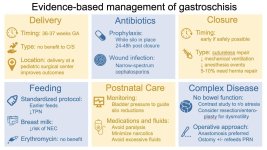
A systematic review of evidence by the APSA Outcomes & Evidence Based Practice (OEBP) Committee found that use of a standardized feeding protocol was associated with earlier initiation of feeding and decreased duration of TPN (Slidell, 2021).
Infants born at a center with pediatric surgical capability had decreased mortality, length of hospital stay and time to enteral feeding compared to those delivered at centers without this capability. Given evidence suggesting increased risk of GI and respiratory infections in gastroschisis, the APSA OEBP Committee recommends the use of broad-spectrum antibiotics for 24-48 hours following primary closure of gastroschisis (Level of Evidence V/ Grade of recommendation C). A multicenter, randomized, double-blind trial of postoperative use of erythromycin (Curry, 2004) found no difference in outcomes between infants treated with erythromycin vs. control. Based on this study and a paucity of additional evidence, the APSA OEBP Committee concluded there is no support for the use of erythromycin in gastroschisis (Level of Evidence I/Grade of recommendation B) (Slidell, 2021). Finally, this Committee also recommends minimizing narcotic use in this patient population given an association between prolonged narcotic therapy and worsened neurodevelopmental outcomes in patients with gastroschisis.

repview.jpg
 
Back
Top