Correct answer
c bronchial atresia.
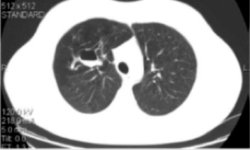
Bronchial atresia is a congenital abnormality resulting from focal interruption of a lobar, segmental or subsegmental bronchus with associated peripheral mucus impaction, mucocele formation and associated hyperinflation of the distally obstructed lung parenchyma. The diagnosis is suggested on chest radiograph by a perihilar mass with well-defined margins and hyperlucency of the lung parenchyma. High resolution computerized tomography is more sensitive with the following imaging findings: cystic lesion with hypovascularization surrounded by an overinflated pulmonary parenchyma. Three-dimensional rendering defines segmental or lobar involvement.
The pathogenesis of bronchial atresia is unknown. One theory is that bronchial atresia is caused by an intrauterine ischemic event after the sixteenth week of gestation. The normally developed adjacent parenchyma secretes mucus, with formation of impactions. Ventilation through collateral pores inflates the segment.
Symptoms include cough, wheezing, dyspnea, recurrent pneumonia, and pneumothorax, although up to half of older patients may be asymptomatic. Most reports recommend surgical resection in symptomatic older children and adults.
Bronchial atresia is also frequently associated with other congenital lung malformations such as congenital pulmonary airway malformations, extra- and intralobar sequestrations and lobar emphysema suggesting a possible common pathogenesis.