• Welcome to Pediatric Surgery Club! If this is your first visit, please sign up to get the best experience sign up!

weekly question 11/10/2026

.US site, click here!

Admin

Administrator
Staff member
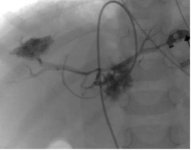
A 3-year-old child had three episodes of severe esophageal variceal bleeding in the last year. An ultrasound demonstrates extrahepatic portal venous thrombosis with cavernous transformation. This wedged hepatic vein portogram was obtained. The most appropriate next step is:
repview (14).jpeg

a Distal splenorenal shunt

b Meso-Rex bypass

c Liver transplantation

d Transjugular intrahepatic portosystemic shunt

e Aggressive variceal banding
 
correct answer
b Meso-Rex bypass

Extrahepatic portal venous thrombosis is most frequently idiopathic, but in Western countries more than half of cases are due to complications of umbilical venous catheterization. Recurrent variceal bleeding that is refractory to banding is an absolute indication for operative decompression of portal flow. The meso-Rex bypass is "physiological" as it shunts blood from the superior mesenteric vein to a 3 cm segment of the left portal vein called the Rex recessus. This operation is successful in up to 90% of cases but is only an option when there is communication between the left and right portal venous circulation and liver function is intact. When there is intrahepatic portal venous obstruction or a Rex shunt has failed, a portosystemic bypass like the distal splenorenal shunt is the next step. TIPPS is not indicated as it relies on a patent portal vein. Liver transplantation is necessary if shunting fails.
 
Back
Top